Renovating in Italy - Step 2
Permits, Professionals and What you Can and Cannot Change
In Blogpost Renovating in Italy Step 1, we looked at the technical state of your Italian home, what's solid, what needs attention, and how to approach those first weeks with clarity.
Now comes the part most people underestimate and are surprised about: understanding what you're legally allowed to change, which permits apply, and who's responsible for what.
This is where many renovation dreams hit unexpected delays or extra costs. Not because the Italian system is impossible, but because it works on a different logic than what most of us are used to in other country’s.
In this article you can find the basis of:
What you can and cannot change in most Italian houses without a permit
Which permits exist and who is normally responsible for them
What geometri, architects and engineers each bring to a project
What typical fees and cost structures look like in practice for this phase
When it makes sense to involve a professional and how to check if they are officially registered
The goal is not to turn you into a technician, but to inform you and help you ask better questions.

Our facade renovation in a Unesco region: We could not have restored our facade and replaced the windows without our geometra filing the work with the municipality first.
“Yes, even a internal layout change can make you need a CILA or SCIA.”
What You Can Do Without a Permit (Usually)
Italy has a beautiful term for this: edilizia libera literally "free building." These are smaller, maintenance-based works that don't change your home's structure, layout, or exterior appearance. Yes, even a internal layout change can make you need a CILA or SCIA. In the Netherlands (where i come from) we’re used that we can do most of the things in the house without a permit, in Italy that’s a completely different story.
Typical permit-free works include:
Painting, plastering, and interior finishes
Replacing floors
Updating kitchens or bathrooms
Upgrading electrical systems within the existing setup
Renewing heating or cooling equipment that's already in place
Installing small heat pumps
Adding pergolas or other sunblocking installments that aren't permanently fixed
Solar panels (outside protected zones)
Sounds simple, right? Here's the catch.
When "Permit-Free" Isn't Actually Permit-Free
Much of Italy, especially the beautiful, historic parts that drew us here in the first place, is under cultural or landscape protection. In these areas, even seemingly simple exterior works require approval.
I know these rules can feel frustrating at times. But here's the thing: these same regulations are why Italy remains so stunning. The cascine, the stone villages, the terracotta roofs. they've survived centuries precisely because they're protected. As foreigners who chose to make our homes here, respecting these rules means honoring what made us fall in love with Italy to begin with.
If your property is in:
A UNESCO area or buffer zone
A historic center (zona A)
A landscape protection zone (vincolo paesaggistico)
An area under Soprintendenza oversight
Or if you own a historic cascina or rural building
Then these works likely need approval:
Removing or changing façade plaster
Changing exterior colors
Replacing shutters with different profiles or materials
Modifying roof tiles
Adding external insulation
Renewing windows with different material or proportions
Adding pergolas or shading structures
Our cascina is located in a protected zone, so we learned this lesson early on. When we needed to completely redo our façade, the plaster was coming loose, and replace our windows with different models, our geometra had to formally notify the municipality before we could proceed. Even though these might seem like straightforward maintenance works elsewhere, the protected status of our area meant approval was required.
“I know these rules can feel frustrating at times. But here’s the thing: these same regulations are why Italy remains so stunning. ”


The Three Permits That Actually Matter
Italy uses three main procedures for renovation works, each with a different legal purpose. Below you’ll find clear definitions that help you understand which one applies to your project. Always discuss with your professional which procedure applies to your renovation.
1. CILA (Comunicazione Inizio Lavori Asseverata)
A CILA (Comunicazione Inizio Lavori Asseverata) is a certified notice that allows you to start interior renovation works that do not affect the structure of the building. It is not a request for permission but a formal communication, signed by a qualified professional who takes legal responsibility for the work.
What it covers (for example):
Moving or adding non-loadbearing walls
Relocating kitchens or bathrooms within existing connections
Modifying internal installations
Raising floors or changing levels without structural impact
Timeline:
Start of works: Immediately after filing
This is the simplest regulated renovation path. Still, it requires a professional to sign off and assume responsibility, you can't file it yourself.
2. SCIA (Segnalazione Certificata Inizio Attività)
A SCIA (Segnalazione Certificata Inizio Attività) is a certified declaration that allows construction works to begin immediately, covering interventions that impact the building’s structure, stability or major installations. It shifts responsibility to the signing professional, while the municipality has 30 days to object.
What it covers (for example):
Structural modifications
Creating or enlarging openings
Roof changes
Adding insulation to the building envelope
Adding bathrooms/kitchens where none existed
Changing installation routes in significant ways
Timeline:
Start of works: immediately after filing unless the municipality intervenes (they have 30 days to object)
The SCIA lets you start work right away, but all the responsibility sits with the professionals who sign it. This is why choosing the right team matters so much.
3. Permesso di Costruire
A Permesso di Costruire is the formal building permit required for any intervention that changes the volume, shape or external appearance of a property. It is a full planning approval issued by the municipality after technical and architectural review, and it applies to extensions, reconstructions and conversions.
What it covers (for example):
Extensions
Swimmingpool in the ground
New structures
Major façade transformations
Reconstructions
Raising the roof
Converting barns into full residential space
Timeline:
Municipal review: Usually 3-9 months
Start of works: Only after approval
In protected areas, expect longer review times because the permit needs approval from extra commissions. Remember, you must start within 1 year and complete in 3, or reapply.
“You use a CILA for internal changes that don’t affect the building’s structure or some works in protected areas. You can start right away!”
Maximize the Potential of Your Italian Renovation
Renovating an Italian home is something you probably do only once. Make sure every big decision is the right one.
We combine technical building knowledge, restoration experience and interior design. Before moving to Italy we managed complex restorations of canal houses, villas and listed buildings. Now we support international homeowners in Piemonte with clear, independent advice.
With the right guidance you avoid costly mistakes, delays and layouts that do not work in daily life. You gain overview, a realistic plan and a house that feels calm and considered.
This is how we can support you:
Brainstorming session
A focused session online or on site in Piemonte where we review your plans, discuss permit strategies and explore design options. You walk away with clarity, priorities and concrete next steps.
On site renovation support in Piemonte
Independent guidance during your renovation. We help you prepare decisions, check drawings and quotes and stay in control while the Italian professionals handle the formalities and construction.
Maintenance and interiors in Piemonte
For second homes we also help with practical maintenance and interior choices so the house works well in daily use and feels inviting for you and your guests.
Curious what this could look like for your project
Leave a short message through our contact form and share where you are in the process. We will get back to you with options for a session or coaching that fit your situation.
Converting Non-Habitable Space Into Living Space
A subject that is quite common here in the countryside of Piemonte:
Thinking about turning a barn into a livingspace?
Three elements determine what is possible:
Height
Standard living areas require 2.70 m; bathrooms and circulation 2.40 m. Recent regulations allow exceptions if comfort and energy conditions are improved.Light
Windows must cover at least 1/8 of the floor surface. Barns with tiny openings usually need enlarged windows, not always allowed in protected zones.Volume
Rural properties often allow around 20% additional volume, but protected areas are far more limited. Any increase in volume requires a Permesso di Costruire.
And every m³ you turn into living space adds a municipal fee, varying by Comune.

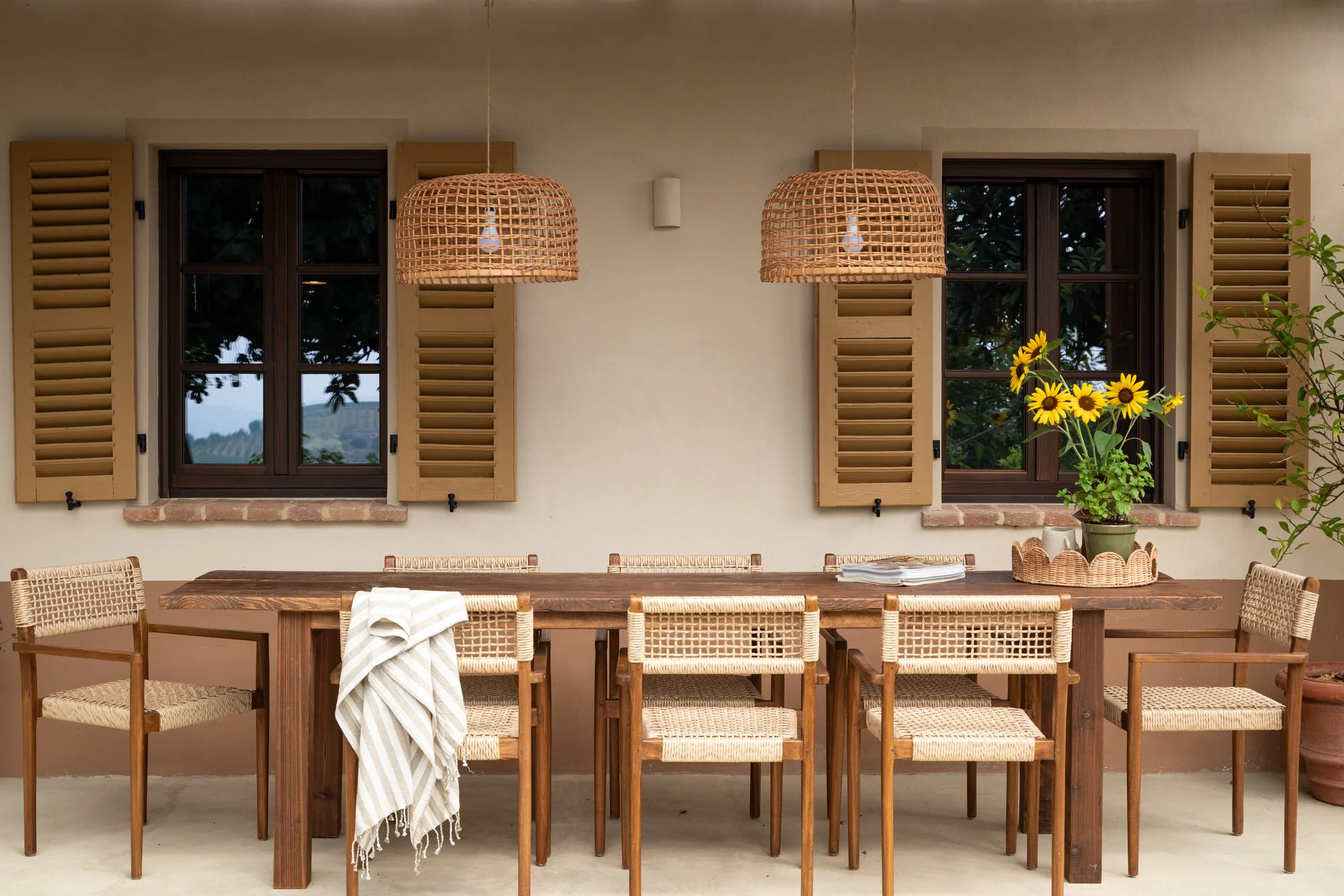
The result of our facade renovation, do you recognise it from the first picture in this blog?
The Hidden Steps No One Talks About
These are the parts that rarely get explained during the buying/renovation process, but they matter for both renovation and resale.
Checking Your Property Records
Before you can even apply for permits, your geometra needs to verify that your building matches both:
The official planning files (conformità urbanistica)
The cadastral records (conformità catastale)
If there are discrepancies, and there often are in older properties, they must be corrected first. This can influence which permits are even possible. Salva Casa offers amnesty options for older illegal works, which can help here.
Updating the Cadastre (DOCFA)
If your internal layout changes, even slightly, the geometra must update the cadastre through a DOCFA procedure. This ensures official records match reality. It's not optional.
Safety Coordination
If you have more than one contractor working on site at the same time, Italian law requires a safety coordinator (coordinatore sicurezza). This role is often bundled into the SCIA package.
Closing Out Your Works (Fine Lavori)
Most regulated works must be officially closed with a fine lavori notification. Think of it as the formal statement that your project has ended according to plan.
Agibilità Certificate
If you've changed structure, installations, or layout, you may need to update or request the agibilità—the document confirming your home meets safety, stability, and habitability requirements. This is crucial for insurance and future sales.
Installation Certifications
Every installation, electricity, water, gas, heating, air conditioning, must be certified through a Dichiarazione di Conformità. These certificates are fundamental for insurance, safety, and selling your home later.
Yess i know Dutchies, we’re used to be able to do all of this ourselves but in Italy it just works different. Some people work around these rules thought.
An Important Tax Note: The 10% IVA Benefit
Many homeowners miss this completely:
To benefit from the reduced 10% VAT rate for renovation works (instead of 22%), you usually need a CILA or SCIA filed.
Without the correct documentation, the tax office classifies your works as ordinary maintenance, which means you pay the full 22% VAT. On a €50,000 renovation, that's a €6,000 difference.
This is essential to understand before requesting quotes.
Understanding Who Does What, and Why Titles Don’t Tell the Whole Story
When we first started renovating in Italy, the role of the geometra surprised me. Coming from a Dutch engineering background, I initially assumed their work was comparable to that of an engineer in the Netherlands. It didn’t take long to realise that the Italian system organises responsibilities very differently.
A geometra is trained as a technical professional with a strong focus on permits, surveys, cadastral work and administrative processes. They are excellent at navigating local rules and are essential for any renovation. But their scope is naturally different from that of an architect, designer or engineer, not because of skill, but because the education paths and legal frameworks simply divide tasks in another way.
At the same time, titles in Italy do not tell you everything. Two geometre can work completely differently, just as architects or engineers can vary enormously in experience, involvement and problem-solving ability. What matters most is the person, their background, their way of thinking and their ability to anticipate challenges before they appear on site.
This is something Boy and I recognised immediately. Because we both spent years managing complex projects in the Netherlands, from heritage buildings to large-scale renovations, forward planning, installation logic and coordination between disciplines have become second nature. That perspective is not automatically present in every professional.
For many international homeowners, the missing link is someone who connects design ambition, technical logic and local requirements. This is exactly where we help most clients create a smooth renovation path. Enough of self promotion ;-) let’s move on!
To give you a clearer starting point, the next section outlines the general differences between these roles, but keep in mind that the person behind the title often makes the biggest difference.
The Differences
Geometra
Technical high school + state exam.
Handles surveys, CILA/SCIA, cadastral work and everyday permitting.
Legally limited to modest civil works and cannot sign structural or seismic design.
Strong in local rules and bureaucracy; less focused on installation strategy, long-term planning or design.
Often works alongside architect or engineer on larger or historic projects.
Architect
University degree + state exam.
Full design authority for layouts, façades, extensions and interiors.
Can file a Permesso di Costruire; structural and seismic parts require an engineer.
Strong sense of light, flow and materials; less focused on installations and technical systems.
Level of site coordination varies and depends on the contract, sometimes by an employee who is an geometra.
Engineer (Structural)
University degree + state exam.
Responsible for structure, seismic checks, reinforced concrete, steel, timber, and SCIA strutturale.
Strong in complex structural logic; less involved in layout or aesthetics.
Engineer (Installations)
University degree + state exam (energy/mechanics/electrical).
Designs heating, cooling, ventilation, plumbing, electrical distribution, energy systems and technical rooms. You may need an electric engineer to prepare a technical project for electrical installations exceeding 6 kW, above 50kW for gas and above 35kW for heating systems.
Prefer to Prepare a bit More First?
If you first want to get your numbers, phases and technical checks in order before you involve a professional, have a look at our store. There you can find our current tools on renovating and join the email list for updates when new templates about budget management, guides and checklists go live.
You can also explore our blog for honest stories, costs and lessons learned about renovating in Italy.
When to Involve a Professional
For the buying phase we go into more detail in our free Home Buying Guide for Italy. That guide explains when it makes sense to have a geometra or technical expert check a property before you commit.
If you did not have involved a professional yet you can still bring one in at several key moments. Ideally you speak to a geometra, architect or engineer at the very start of your renovation plans. They can tell you early on what is or is not realistic in your specific area. Think of ideas like a roof terrace in a UNESCO zone or turning one farmhouse into several apartments.
When you start looking for someone it is smart to:
Request at least two or three offers
Check their name and number in the official online register for that profession, unfortunately this is really necessary to check!
– Geometra: Collegio dei Geometri in your region
– Architect: https://www.cnappc.it/
– Engineer: https://www.cni.it/albo-unicoAsk what type of projects they usually work on
This way you know you are working with someone who is officially qualified and you understand sooner what is possible with your Italian home. It makes it much easier to build a realistic plan and avoid surprises later. The best professional’s can be find when asking at your favorite bar, your neighbors or the commune.
The Three Questions To Clarify
These three questions help you understand exactly what your renovation requires. legally, technically and practically.
1. Which permits are required for each part of the project?
Ask for a clear breakdown per intervention: internal changes, structural works, façade updates, installations, exterior works or volume changes.
2. Should we separate parts of the project or treat everything as one procedure?
In Italy, splitting a renovation into smaller steps can sometimes speed things up, for example, filing a CILA for internal works while preparing a separate SCIA or Permesso for structural or exterior changes. The right strategy depends on your Comune and the complexity of your house.
3. Which professionals are legally required, and where might I need additional support?
Every permit type has mandatory roles. Beyond that, many international homeowners choose extra guidance to keep design, structure, installations and on-site decisions aligned. This is where support becomes practical, not just bureaucratic.
What Italian Professional Services Typically Cost
Professional fees in Italy are calculated differently from what many Northern-European homeowners expect. The ranges below help you plan realistically:
Light works / simple CILA
About 4% of the construction cost (design + administration).
Small procedures may also have fixed fees (€500–1.000).Full renovation with design, permits, site coordination and safety
Typically 8–10% of the construction cost.
Calculated on net costs (excluding 22% VAT and 4% social fund).
Clear expectations upfront prevent surprises and help you decide how much of the coordination you want to take on yourself, and where experienced guidance gives you clarity, speed and a smoother process. You often see a fixed price for the design and administration and an percentage of 3 or 4% of the price of the contractor.
Renovating in Italy Series
Step 1 — The beginning and understanding the technical state
Step 2 — Permits and professionals (you are here)
Step 3 — From dreams to a renovation concept that works (January 2026)
Step 4 — Planning your renovation timeline (February 2026)

Meet the Writer
This blog was written by Jennifer Kenters-Building engineer and designer-passionate to make it easier for others to navigate the Italian home-buying process.
After renovating historic buildings in the Netherlands for years, I moved to Italy where I now work with buyers and homeowners who want to transform old farmhouses, apartments and holiday homes into something functional, comfortable and beautiful.
Through our own cascina renovation in Piemonte, I quickly realised how different the Italian building culture is, how easily important details are overlooked, and how valuable it is to have a clear structure from the very beginning. That is why I created this renovation series, sharing the practical steps, technical insights and lessons I wish every new homeowner had access to.
Today, Boy and I visit properties regularly and guide others through the technical and design stages of their renovation. Combining craftsmanship, construction knowledge and design, we help people make informed decisions before they start the building process.
Want to follow our journey? I share daily updates on our renovation projects, insights, and life in Italy over on Instagram , come say hi!